Query Builder
The JupiterOne Query Builder is a tool that provides a visual way to build a query in J1QL without having to be proficient in the JupiterOne Query Language (J1QL).
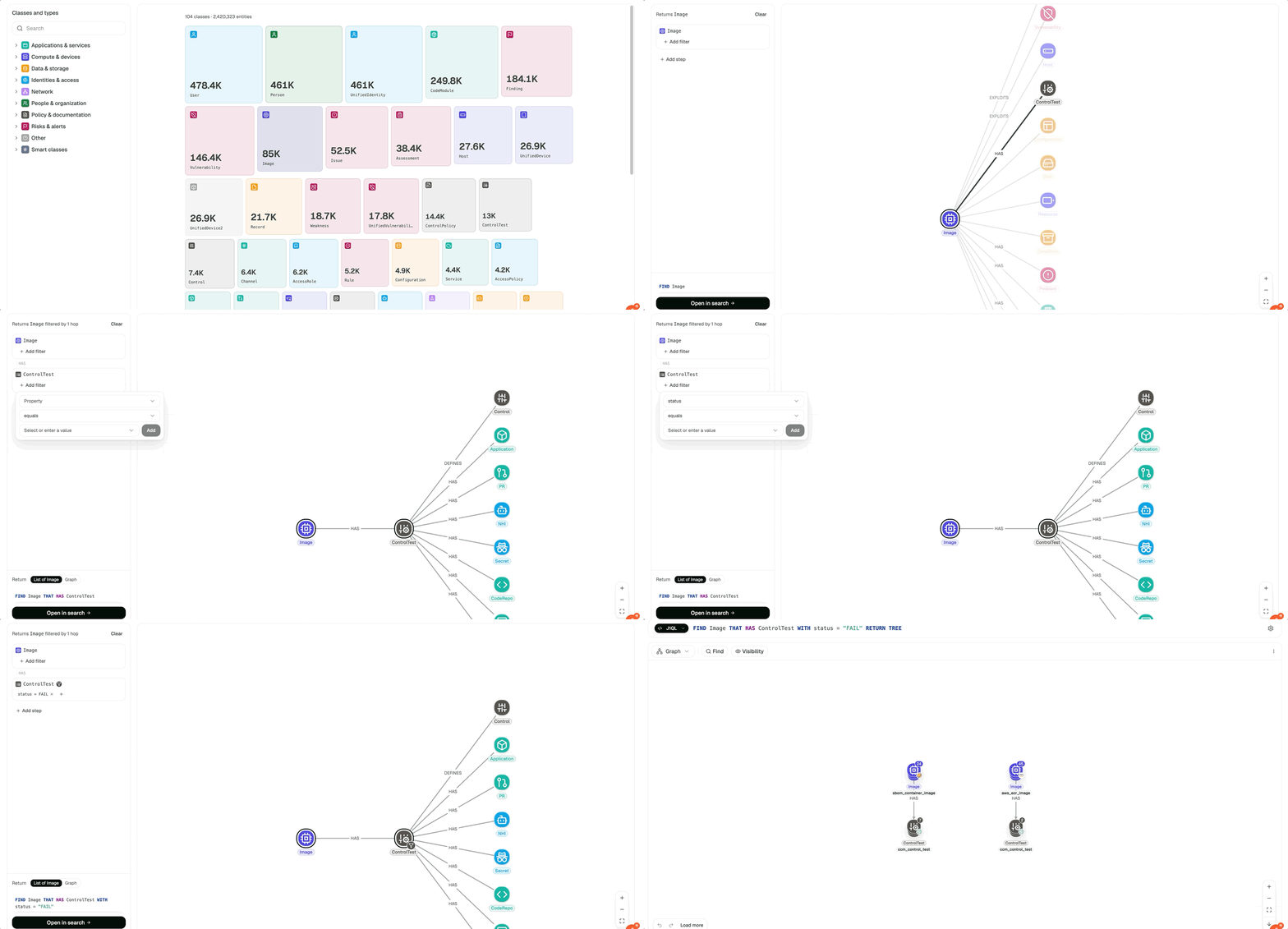
To create a query in Query Builder:
-
Navigate to the Home -> Query Builder page.
-
Click on a class from the bubble chart or the left navigation menu. You can use the search bar to search through classes.
-
Click Add Filter to filter by a specific property, tag, or metadata. Add an operator and specific value you want to query on, if applicable. You can as many filters as you want.
-
Clicking on the first class will load relationships to other classes that exist in your graph. Click on one of the relationships to add it to your query.
-
Click
ListorGraphto choose how you want to return the results. You can toggle between the options by clicking Run Query after you make your selection. -
Click Open in search to open the generated query.
Using the icons in the box at the top right of the page, you can:
- Save the query as a question in the questions library
- Add the query results to JupiterOne Insights
- Create an alert
- Generate a link to the query that you can share
- Copy the query to the clipboard
- Download the query as csv or json
Questions
In addition to the Query Builder, JupiterOne also features a preset library full of common questions, or queries that can assist in jump-starting your data exploration in JupiterOne.
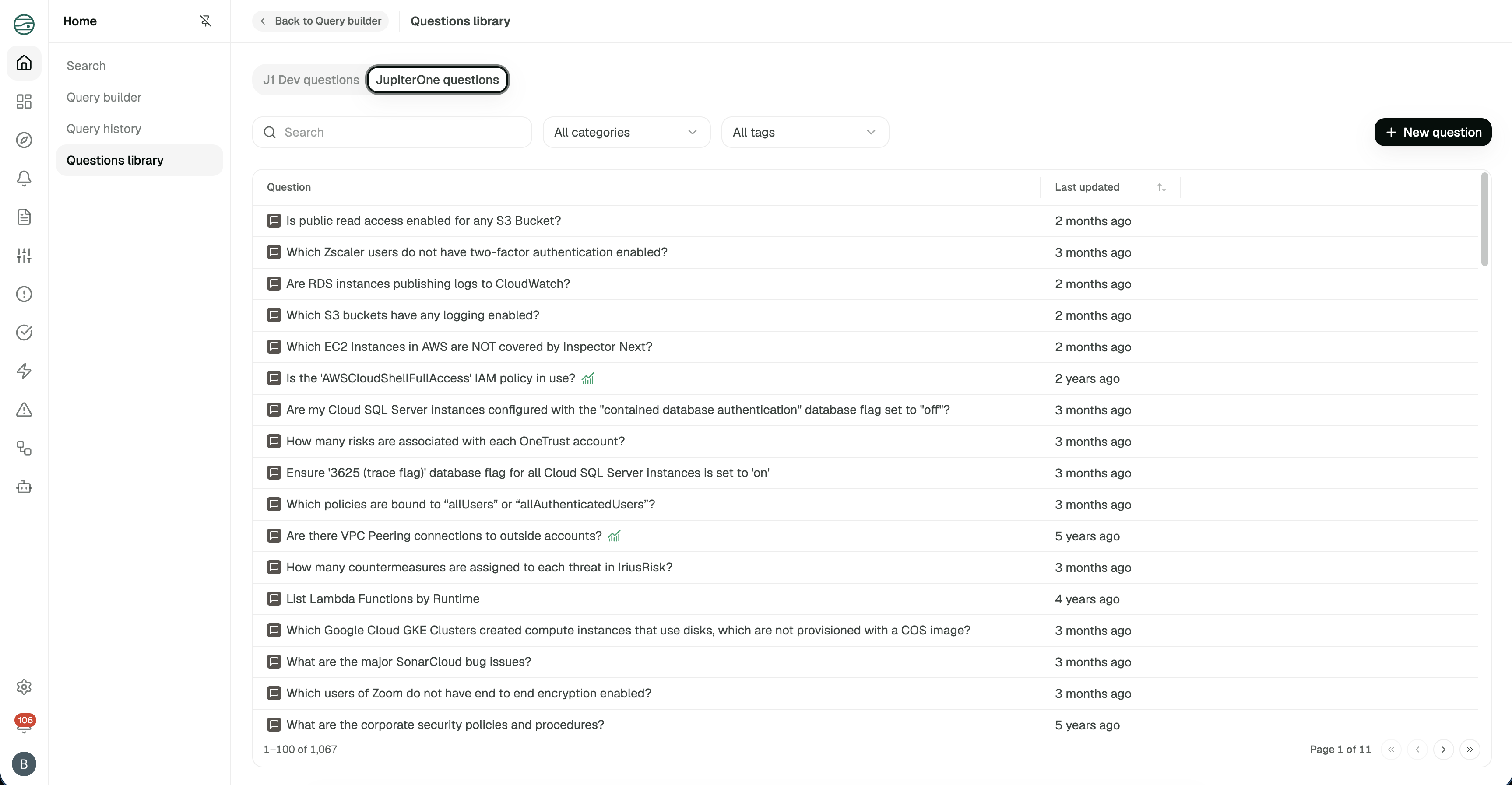
To access the Question Library, navigate to the Home -> Questions library page.
Running a question
To run a question from the Question Library:
- Select the desired question from the list.
- View the results.
Adding a question to the library
In addition to running the prebuilt questions, you can create a question to add to the Question Library by selecting Create Question.
Creating a question required the following:
- Title: the title of the question
- Description: a brief description of the question
- Enable trend data collection (opitonal): informs the system to collect trend data and chart the query results over time
- Set the polling interval: the interval at which the system runs the query (30 minutes, 1 hour, 1 day)
- Tags: additional metadata used to reference the question
- Queries: the J1QL query or queries run within this question